
In Eastern Orthodox Christianity, Jesus Christ is not viewed merely as a historical teacher or a distant judge. Instead, the Orthodox Church places Jesus at the absolute center of human purpose, theology, and everyday prayer life.
From centuries-old liturgical chants to sacred gold-leaf icons, every aspect of Orthodox tradition points back to the Incarnation. Understanding how the Orthodox Church approaches Christology, the Jesus Prayer, and the goal of human salvation provides deep insight into one of the oldest Christian traditions. This guide breaks down the core beliefs about Jesus in the Orthodox faith.
Table of Contents
Who Is Jesus in Orthodox Christianity?
In Orthodox Christianity, Jesus Christ is the eternal Son of God, the second person of the Holy Trinity who possesses two complete natures: fully divine and fully human, united without confusion, change, division, or separation. This foundational doctrine was established at the Ecumenical Councils of Nicaea and Chalcedon.
Orthodox Christians believe that when God took on physical human flesh, He sanctified the material world. As early church father St. Athanasius of Alexandria wrote in the fourth century, God became man so that man might share in divine life. Christ is seen as the great physician who came to heal broken human nature from the curse of death.
Cultivating a mindful, daily spiritual routine is a practice shared across many ancient traditions. If you are interested in exploring how different cultures use physical movement and rhythmic focus for inner reflection, you can read our breakdown of 108 sun salutations to see how disciplined physical routines cultivate mental peace.
What Is the Meaning of the Jesus Prayer in Orthodoxy?
The Jesus Prayer is an ancient, repetitive prayer that says: ‘Lord Jesus Christ, Son of God, have mercy on me, a sinner.’ It serves as the primary tool for contemplative prayer and inner stillness, known as hesychasm, in the Orthodox spiritual tradition.
Orthodox believers repeat this short prayer throughout the day, often using a knotted wool prayer rope called a chotki to maintain their focus. The theological depth of the prayer is profound because it summarizes the entire Christian Gospel in a single sentence:
- Confession of Divinity: By calling Him ‘Lord’ and ‘Son of God,’ the speaker acknowledges Christ’s eternal divine nature.
- Affirmation of Humanity: By speaking the historical name ‘Jesus,’ the believer confesses His real human incarnation.
- Plea for Mercy: Asking for mercy acknowledges human weakness and places complete trust in divine love rather than self-righteousness.
How Do Orthodox Icons Portray Jesus Christ?
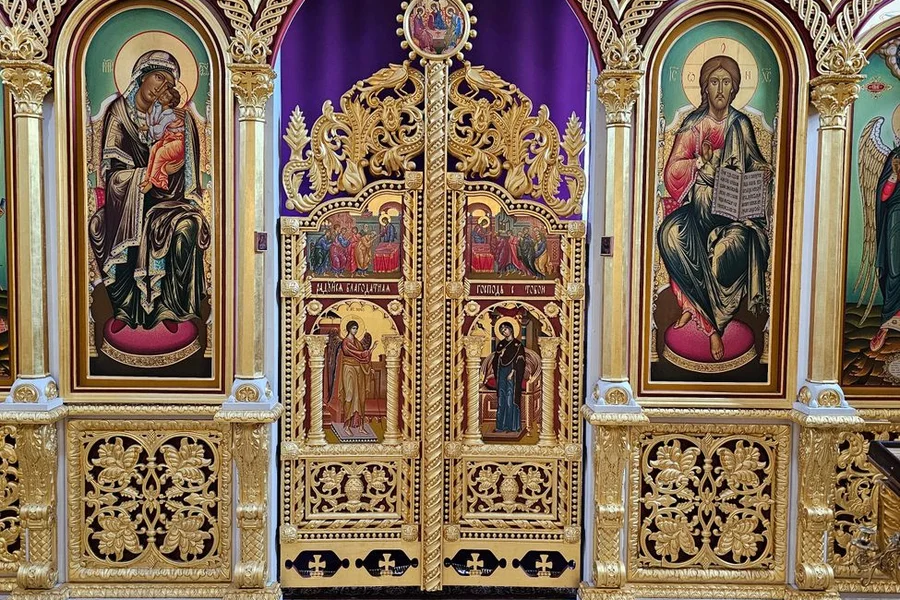
Orthodox icons portray Jesus Christ as the Pantocrator, meaning ‘Ruler of All,’ depicting Him holding the holy Gospel in His left hand while offering a blessing with His right hand. These holy images are not regarded as mere artistic decorations, but as theology written in color.
The Seventh Ecumenical Council affirmed that painting icons of Christ proves the reality of the Incarnation. Because the invisible God became a visible human being, He can be depicted in physical art. If you observe a traditional Pantocrator icon, you will notice subtle asymmetrical facial details: one side represents His divine justice, while the other reflects His tender mercy.
To explore official liturgical texts and icon collections, you can browse educational materials on the Orthodox Church in America website.
What Is the Concept of Theosis?
Theosis is the Orthodox doctrine that human beings are called to participate in the uncreated grace and divine energies of God, becoming transformed into the likeness of Christ. It represents the ultimate goal of Christian life and spiritual practice.
Theosis does not mean that a person becomes God by nature or essence. Instead, it means that through prayer, participation in holy communion, and genuine love for neighbors, a believer is energized by the Holy Spirit. Salvation in Orthodoxy is viewed as an ongoing process of healing and spiritual union rather than a simple legal transaction.
Reflecting on your core values and personal beliefs is a central part of developing your own worldview. Learning how to express your personal convictions clearly, much like the process of writing a personal statement, helps you communicate your core principles to others in a thoughtful manner.
Imagine visiting an Orthodox parish for the first time. If you expect a modern acoustic band, you might be surprised by the ancient acapella chanting and fragrant incense. A common pitfall for newcomers is feeling overwhelmed by the rich symbolism. We recommend standing quietly and taking in the visual beauty of the iconography without worrying about following every liturgical movement.
We prefer exploring original patristic writings because they explain how ancient theology directly connects to daily peace of mind. For historical readings and parish directories, you can visit the digital portal of the Greek Orthodox Archdiocese of America.
Frequently Asked Questions About Jesus in Orthodoxy
Do Orthodox Christians believe Jesus is God?
Yes, Orthodox Christians believe Jesus Christ is fully God, co-eternal and consubstantial with the Father and the Holy Spirit in the Holy Trinity.
Why do Orthodox Christians pray the Jesus Prayer?
They pray the Jesus Prayer to cultivate constant communion with God, quiet distracting thoughts, and keep their minds focused on Christ throughout daily tasks.
What does the halo on Orthodox icons of Jesus mean?
The halo around Christ’s head contains a cross with three Greek letters that spell ‘The One Who Is,’ referencing God’s revelation to Moses in Exodus.
How does the Orthodox view of salvation differ from Western views?
While Western theology often focuses heavily on legal justification and penalty, Orthodoxy views salvation as the therapeutic healing of human nature and union with God.
Are icons considered idols in the Orthodox Church?
No, Orthodox Christians do not worship wood or paint. The honor given to an icon is directed entirely to the person depicted, honoring Christ directly.

Written by Rosella
Rosella is a self-taught digital creator with a passion for breaking down tech, lifestyle, and everyday topics into simple, easy-to-understand content. Based in Youngstown, Ohio, she brings a curious, multi-disciplinary approach to writing, covering everything from the latest tech trends to practical life hacks and personal growth insights.
Her goal is straightforward: take complicated ideas and explain them in a way that actually makes sense, so every reader, whether a total beginner or someone more experienced, walks away having learned something useful. When she’s not writing, you’ll usually find her exploring new tools, sharpening her skills, or spending time with family.
Through this blog, Rosella aims to build a community centered on real, actionable insights rather than fluff, jargon, or filler content.