
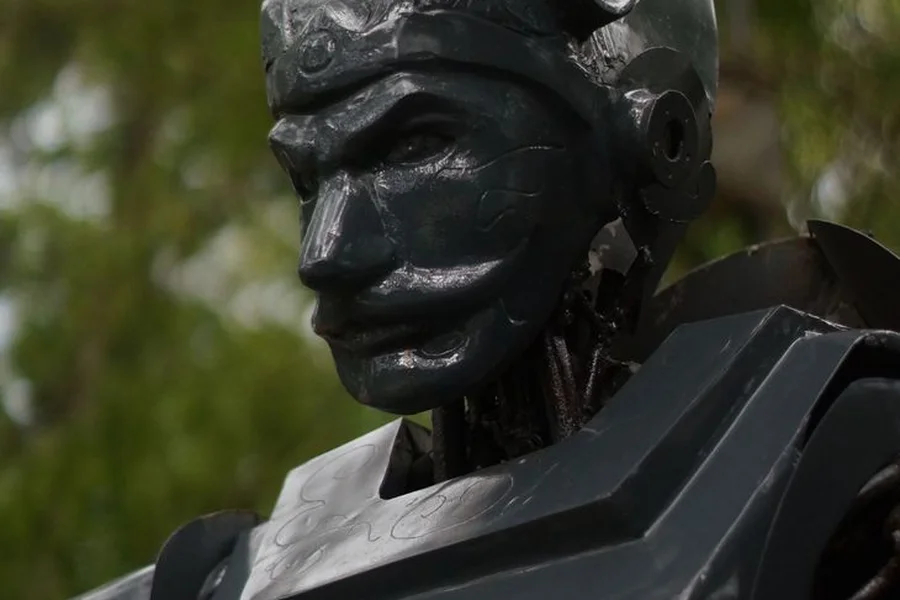
In Dungeons & Dragons Fifth Edition, the Artificer class is famous for blending magic with physical craftsmanship. If you choose the Battle Smith subclass at level three, you gain access to one of the best companions in the game: the Steel Defender.
This mechanical protector acts as a loyal shield in combat, drawing enemy attacks and keeping your squishy spellcasters safe. However, managing its stats, actions, and healing rules requires understanding a few core mechanics. This guide breaks down the rules and combat strategies to help you get the most out of your construct companion.
Table of Contents
What Is a Steel Defender in D&D 5e?
A Steel Defender is a loyal, medium-sized construct companion created by a Battle Smith Artificer to assist in combat and exploration. You determine its physical appearance, choosing whether it stands on two legs or four, though this choice does not alter its official game statistics.
The companion is friendly to you and your allies, obeying your commands instantly. In combat, it shares your initiative count but takes its turn directly after yours. It can move and use its reaction freely on its own, but it only takes the Dodge action on its turn unless you use your bonus action to command it to perform a different task.
Building and maintaining a mechanical construct requires a specialized set of gear. Just as mechanics and tradespeople rely on specific equipment for their jobs, you must use your smith’s tools to build or restore your companion. If you are interested in how gear requirements work in real-world professions, you can read our guide on whether trade workers must bring your own tools to see how tools are managed on site.
How Do You Calculate Your Steel Defender’s HP?
You calculate your Steel Defender’s hit points using a specific formula: 2 + your Intelligence modifier + (5 times your Artificer level). This formula ensures that your companion’s durability scales automatically as your character gains levels.
For example, if you are a level 5 Artificer with an Intelligence modifier of +4, your defender will have 31 hit points: 2 + 4 + (5 times 5). This scaling system makes the companion durable enough to stand on the front lines throughout your campaign. Additionally, the construct features a base Armor Class (AC) of 15 and immunity to poison damage, making it highly resistant to common battlefield hazards.
How Does the Deflect Attack Ability Work?
The Deflect Attack ability allows the Steel Defender to use its reaction to impose disadvantage on an attack roll targeted at another creature within 5 feet of it. To use this feature, the defender must be able to see the attacker, and the reaction must be declared before the attack roll is rolled.
This reaction is one of the most powerful defensive tools in the Battle Smith’s toolkit. It does not cost the Artificer any actions, meaning you can still cast spells or attack on your own turn while your defender protects your allies. It is particularly useful for shielding rogue or wizard companions who stand near the front lines.
From what we’ve seen while analyzing different combat situations, placing your defender next to your party’s main defender makes it very difficult for enemies to land successful hits. For official rules updates and companion worksheets, you can visit the digital character portal on D&D Beyond.
How Do You Repair or Revive Your Steel Defender?
You can repair your Steel Defender by casting the Mending cantrip to restore 2d6 hit points, or by commanding the defender to use its Repair action to heal itself. If the defender is reduced to 0 hit points and destroyed, you can revive it by spending a 1st-level spell slot and using your smith’s tools.
The Repair action can be used a number of times per day equal to your Proficiency Bonus. When used, the defender restores 2d8 + Proficiency Bonus hit points to itself or to another construct within 5 feet. This healing mechanic is crucial for keeping the companion active during long dungeon crawls.
Keeping a mechanical construct repaired is similar to administering first aid to a companion during an athletic activity. If you participate in physically demanding sports, you know how important quick treatment is for minor injuries. Reading about common first aid injuries helps you understand the importance of quick recovery protocols on and off the field.
Imagine you are in the middle of a dungeon and your defender is destroyed. If you do not have any spell slots left, you must wait until you take a long rest to rebuild it for free using your tools. A common pitfall is forgetting that the defender cannot heal itself if it is already reduced to 0 hit points. We recommend keeping its health above 10 points to avoid losing its reactions during critical turns.
We prefer using the Mending cantrip between combat encounters because it costs no spell slots, allowing you to save your magic for powerful combat spells. To read more about the Artificer class rules, you can check the official sourcebooks on the Wizards of the Coast website.
Frequently Asked Questions About Steel Defender
Can a Steel Defender use magic items?
A Steel Defender can use certain magic items if the item does not require attunement or a humanoid form. For example, it can wear a Ring of Protection, but it cannot use items that require speaking command words.
Does the Steel Defender get its own turn in combat?
Yes, the Steel Defender shares your initiative count, but its turn takes place immediately after yours. It can move and use its reaction on its own, but it requires your command to act.
Can you ride your Steel Defender as a mount?
Yes, you can ride your Steel Defender as a mount if your character size is Small (such as a Gnome or Halfling). Since the defender is a Medium construct, it is large enough to carry a Small rider.
What happens to the defender if the Artificer dies?
If the Artificer dies or becomes incapacitated, the Steel Defender can take any action of its choice, rather than just the Dodge action, and will usually work to protect your body and your allies.
Does the defender’s attack count as magical?
No, the Force-Empowered Rend attack deals force damage, which naturally bypasses standard physical damage resistances, but the attack itself is not technically classified as a magic weapon attack.

Written by Rosella
Rosella is a self-taught digital creator with a passion for breaking down tech, lifestyle, and everyday topics into simple, easy-to-understand content. Based in Youngstown, Ohio, she brings a curious, multi-disciplinary approach to writing, covering everything from the latest tech trends to practical life hacks and personal growth insights.
Her goal is straightforward: take complicated ideas and explain them in a way that actually makes sense, so every reader, whether a total beginner or someone more experienced, walks away having learned something useful. When she’s not writing, you’ll usually find her exploring new tools, sharpening her skills, or spending time with family.
Through this blog, Rosella aims to build a community centered on real, actionable insights rather than fluff, jargon, or filler content.